Robotics Data
Robot training data for physical AI
PrismaX provides two kinds of robot training data: teleoperation data, recorded as skilled operators drive real robot arms through tasks, and egocentric data, first-person video of hands-on work at real work sites.
The catalog covers 65 tasks across 7 scenes, and every episode is scored for quality before it ships.
Two kinds of data
Teleoperation and egocentric.
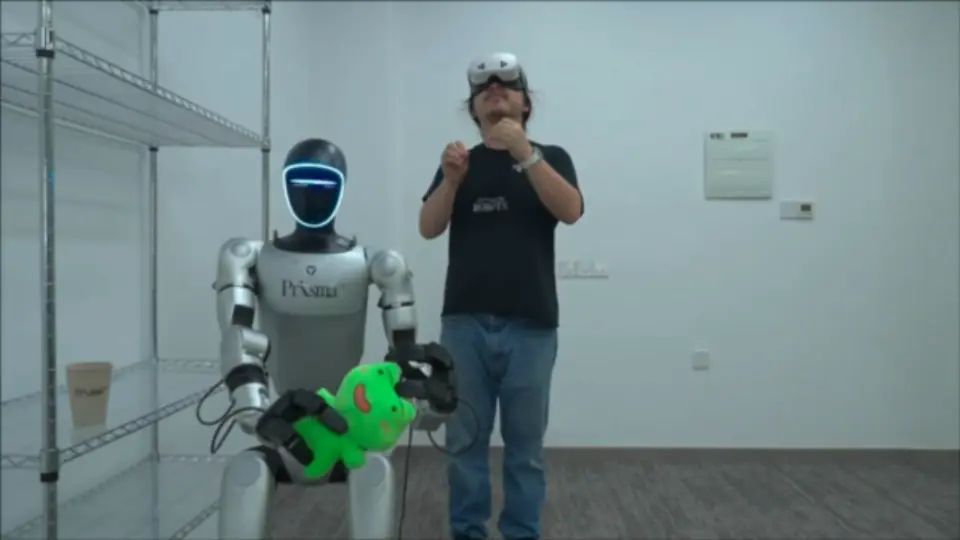
Teleoperation data
Skilled operators drive real robot arms through tasks, recorded with overhead and wrist cameras and full joint states.
65 tasks
4 arm families
Egocentric data
First-person video of hands-on work at real work sites, captured with phones, action cameras and headsets.
clip count
Recorded at real work sites
Data catalog
65 tasks. 7 scenes. One table.
| Task | Robot arms | Scene | Episodes |
|---|---|---|---|
| Biology Lab | YAM | Lab and Research | 108.8k |
| Pick and place various fruits into containers | Piper · RLM 63 · TOK2 · YAM | Kitchen | 2.8k |
| Pick and place flowers into vase and vase on shelf | Piper · RLM 63 · TOK2 · YAM | Home | 2.0k |
| Block manipulation | YAM | Home | 2.0k |
| Pack box of components | YAM | Logistics | 1.8k |
| Pick and place slippers into bin | Piper · RLM 63 · TOK2 · YAM | Home | 1.6k |
| Tying shoelaces | YAM | Home | 1.5k |
| Clean up kitchen area | YAM | Kitchen | 1.4k |
| Unpack box of objects into bins | YAM | Logistics | 1.2k |
| Pick and place school supplies | Piper · TOK2 · YAM | Office | 1.1k |
| Pick and place toothbrushes | Piper · RLM 63 · TOK2 · YAM | Home | 1.1k |
| Pick and place donuts | Piper · RLM 63 · YAM | Kitchen | 993 |
| Pick and place first aid supplies | Piper · YAM | Logistics | 982 |
| Sort medicine bottles by pill shape | Piper · RLM 63 · YAM | Home | 979 |
| Connector plugging | YAM | Industrial | 932 |
| Pick and place packaged food items | Piper · RLM 63 · YAM | Misc | 930 |
| Organize a very messy desk | RLM 63 · YAM | Office | 863 |
| Hang clothes | YAM | Home | 862 |
| Align/sort papers into neat piles | YAM | Office | 802 |
| Sort toys by category | Piper · RLM 63 · TOK2 · YAM | Home | 796 |
| Organize dishwasher / dish rack | RLM 63 · YAM | Kitchen | 643 |
| Put away messy clothes | YAM | Home | 624 |
| 18650 battery QA | YAM | Industrial | 605 |
| Kitting parts | YAM | Industrial | 267 |
| Height gauge | YAM | Industrial | 214 |
| Hang shirts | RLM 63 · YAM | Home | 114 |
| Hang cups | RLM 63 · YAM | Home | 82 |
| Assemble a workstation | RLM 63 · YAM | Office | 76 |
| Set the table | RLM 63 · YAM | Kitchen | 70 |
| Dishwasher unloading | RLM 63 · YAM | Kitchen | 69 |
| Arrange the meeting desktop | RLM 63 · YAM | Office | 68 |
| Toilet cleaning | RLM 63 · YAM | Home | 68 |
| Insert items into polybags | RLM 63 · YAM | Logistics | 67 |
| Decant liquids | YAM | Kitchen | 66 |
| Wipe counter | RLM 63 · TOK2 · YAM | Kitchen | 62 |
| Pick and place small office necessities into bins | RLM 63 · YAM | Office | 59 |
| Cook instant food | RLM 63 | Kitchen | 51 |
| Return books to bookshelves | RLM 63 | Office | 49 |
| Pack clothes for travel | RLM 63 · YAM | Home | 48 |
| Fold clothes | RLM 63 · YAM | Home | 41 |
| Make a continental breakfast | RLM 63 | Kitchen | 40 |
| Sort foods in Ziploc bags and zip up | YAM | Kitchen | 39 |
| Hang clothes to dry | RLM 63 | Home | 30 |
| Cup cleaning | RLM 63 | Home | 30 |
| Coffee table cleaning | Piper · RLM 63 | Home | 21 |
| Restock refrigerator with bottled water | RLM 63 | Kitchen | 20 |
| Shelf restocking | RLM 63 | Logistics | 20 |
| Lab pick and place | RLM 63 | Industrial | 20 |
| Sort fasteners | RLM 63 | Industrial | 20 |
| Tear and fold paper towel into smaller napkins | RLM 63 | Kitchen | 18 |
| Clear bar counter | RLM 63 | Home | 17 |
| Prepare plate or bowl of food | RLM 63 | Kitchen | 15 |
| Separate vegetables for cooking prep | RLM 63 | Kitchen | 11 |
| Pack box tightly | RLM 63 | Logistics | 11 |
| Hang hair dryer | RLM 63 | Home | 10 |
| Showerhead cleaning | RLM 63 | Home | 10 |
| Cover the airtight container’s sealing ring | RLM 63 | Kitchen | 1 |
| Place fragile glass cups in a storage container | RLM 63 | Kitchen | 1 |
| Open a built-in drawer and retrieve an item | RLM 63 | Home | 1 |
| Medium Parcel Sorting & Loading | RLM 63 | Logistics | 1 |
| Place items in a bag and seal the Velcro closure | RLM 63 | Logistics | 1 |
| Slide a zipper closure to seal a bag | RLM 63 | Kitchen | 1 |
| Operate a hand-actuated toilet flush control | RLM 63 | Home | 1 |
| Store paired socks in organizer compartments | RLM 63 | Home | 1 |
| Place a steak in a frying pan | RLM 63 | Kitchen | 1 |
Sample videos
See the data before you buy.
Operators drive robot arms through six everyday tasks: folding a T-shirt, sorting fruit, racking dishes, peeling a banana, tidying desk items and a shape sorter.
First-person clips of hands packing boxes, recorded from the point of view of the person doing the work.
Two robot arms arrange flowers in a vase, seen from the overhead and wrist cameras at the same time.
Quality and delivery
Every episode is scored before it ships.
Software checks the baseline. Validators, people who watch each demonstration, then decide whether it is training-grade and score it. The rubric is published in our Standards for Data.
Checked automatically
- An overhead camera with the whole workspace in view, plus a camera on each wrist
- Joint angles recorded for every joint, matched to the rig's URDF
- Image quality, jitter and sample rate within limits
Judged pass or fail
- The overhead view keeps every object and both wrists in frame
- Images are clear and evenly lit
- The task matches its prompt
- Each action does one thing at a time
- No struggling: small mistakes, quickly recovered
- No mistakes that undo earlier work
Scored on a sliding scale
- Speed
- Smoothness
- Completion quality
- Diversity
- Level of completion
The scores travel with each episode. The First 100 program names the 100 validators whose scores land closest to consensus as founding Data Quality Validators.
How you receive it
Delivery depends on your plan. Robotics Data is in limited release, so access to every plan is by request. See pricing for allowances and release windows.
| Discover | Browser download |
|---|---|
| Researcher | Browser download + API access |
| Enterprise | Browser + API + JSON download |
| Resolution and length |
|
FAQ
Frequently asked questions
What is robot training data?
Robot training data is recorded demonstrations of physical tasks: video from cameras on the robot or the person, plus the state needed to reconstruct the motion, that models learn to imitate. PrismaX provides two kinds, teleoperation data and egocentric data.
What is in the PrismaX data catalog?
65 tasks across 7 scenes (Home, Industrial, Kitchen, Lab and Research, Logistics, Misc, Office), with RLM 63, YAM, Piper, TOK2 robot arms. Each row lists the task, robot arms, scene and episode count; 137.1K teleoperation and egocentric episodes in total.
What is the difference between teleoperation and egocentric data?
Teleoperation data is recorded on a real robot driven by a human operator, so it carries the robot's own camera views and joint states. Egocentric data is first-person video of a person doing the task with their own hands, so it needs no robot and captures how people handle objects in real places.
How is data quality checked?
Software first checks camera coverage, joint states, image quality, jitter and sample rate. Validators then watch each demonstration, apply pass/fail rules such as task matches prompt and no struggling, and score speed, smoothness, completion and diversity. The score stays with the episode.
How is the data delivered?
By browser download on every plan, with API access on Researcher, and browser, API and JSON export on Enterprise. Robotics Data is in limited release, so access is by request.
Can I get data that is not in the catalog?
Yes. Custom data collection, part of Enterprise, records the tasks, robots and scenes you specify. Collection starts within days, with capacity of up to 5,000 hrs a month.

Next step
Find the data your model needs.
Tell us what you are training. We will point you to the right part of the catalog, or scope a custom collection.